A translated film isn’t necessarily ready for international delivery. Film localisation services Australia involve more than converting dialogue: language assets must align with the picture, audio and delivery master. If those elements are out of step, the release may need avoidable rework.
Translation is only one part of release preparation. Subtitles need to match the intended picture version, audio materials need to be conformed to that version, and supporting assets such as trailers may also need preparation. These tasks are most manageable when they’re planned alongside mastering, encoding and quality control.
This guide explains how film localisation works, which assets may be involved and what to prepare before work begins. You’ll learn how to organise source materials and territory requirements, and how localisation connects with technical delivery. 3DUX Media Hub supports film and television content localisation, asset preparation and global distribution workflows, drawing on the industry experience of its principals.
Key Takeaways
- Use the release brief to identify the title version, territories and delivery requirements before localisation work starts.
- Separate language assets, technical integration and final delivery checks so the scope is clear.
- Check that subtitle cues and audio correspond to the approved picture master, especially when a cut is revised.
- Film localisation services Australia can support a coordinated workflow from source-asset preparation through integration and quality control.
- Bring the approved picture reference and available language assets together to give the work a clear starting point.
What film localisation services in Australia cover for distributors
For distributors, localisation prepares a completed film or television title, along with relevant supporting assets, for delivery to a target market. The work may include preparing and integrating language assets with the approved picture and audio, as well as preparing related materials such as a trailer.
Film localisation is the release-focused adaptation and technical preparation of finished content and associated assets for delivery to a target market. It is not film production. Production support concerns the creation of content; localisation addresses how an existing title and its assets are prepared for release. General post-production can cover many finishing tasks, while localisation is scoped around the requirements of a particular release.
When assessing film localisation services Australia, start by listing the assets that need work and how each fits the release package. Translation, asset preparation and technical integration are related, but they are separate tasks. A translated file, for example, is not necessarily an integrated deliverable.
Localisation versus translation: what distributors need to distinguish
Translation converts dialogue or other text into another language. Localisation is broader and release-oriented: it considers how language content is prepared for use with the finished title. Depending on the brief, this may involve subtitle integration, audio conforming or trailer preparation.
Translated text does not, by itself, place subtitles correctly in the film. Integration is a separate technical step: subtitle events must correspond to the picture, while audio assets must be conformed to the relevant version. Dubbing replaces or supplements original dialogue with recorded dialogue in another language. The Dubbing in film localisation overview describes the method and its relationship to subtitling.
Territory-specific creative or compliance requirements can also shape the scope. The distributor’s release brief should identify applicable requirements rather than assume every title or territory needs the same treatment.
Which release assets can localisation prepare?
Localisation deliverables depend on the distribution brief and the materials supplied. A title may need one asset type or a coordinated package. Typical components include:
- Subtitle integration: Placing supplied subtitle assets into the intended version and checking their timing against the picture.
- Audio conforming: Aligning audio materials with the relevant picture version so the selected assets correspond to the cut being prepared.
- Trailer preparation: Preparing trailer materials as part of the title’s wider release assets.
These elements form part of a delivery workflow, not a fixed checklist. A distributor preparing a film for multiple markets can specify the versions, language assets and supporting materials required. That clarity helps keep the finished title and its release assets coordinated. For more on planning content and assets for overseas audiences, the guide to film content localisation for international markets builds on these distinctions.
How film localisation connects subtitles, audio and the picture master
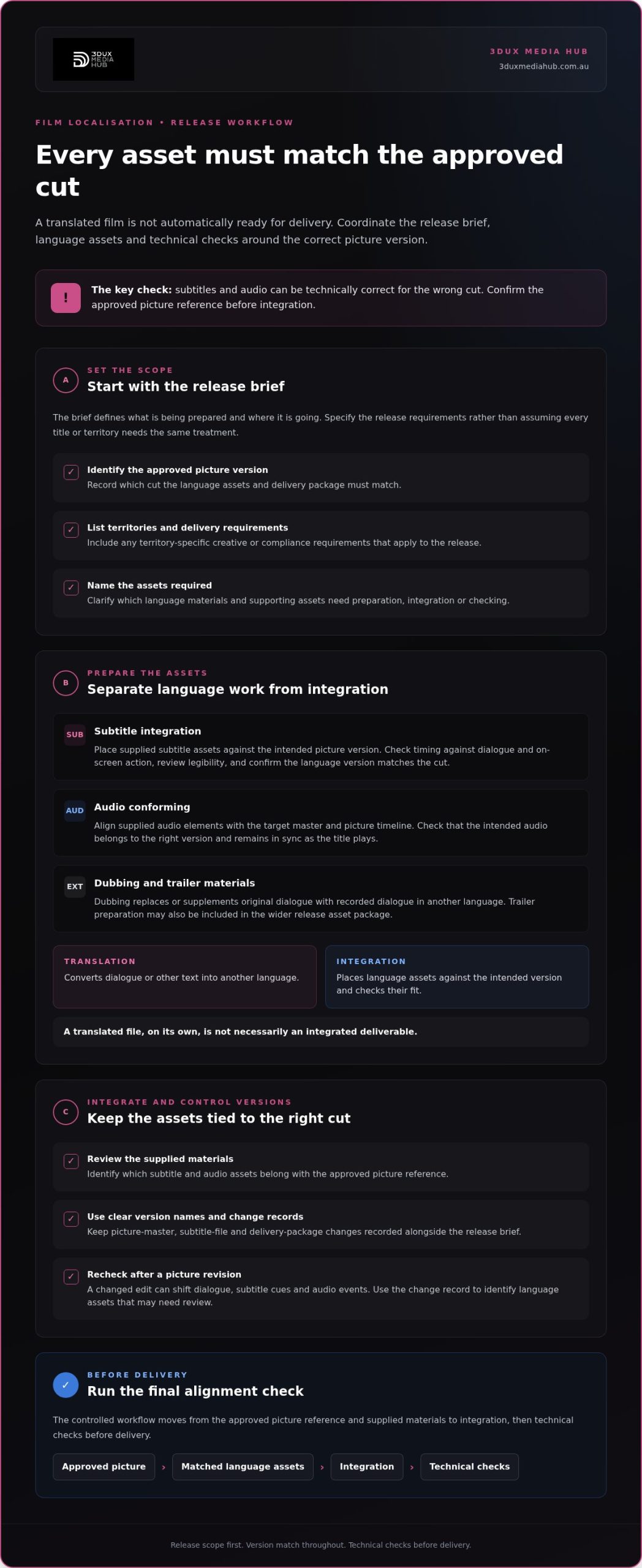
Localisation assets only work when they correspond to the correct cut of the title. A changed edit can shift dialogue, subtitle cues and audio events, even when the language materials themselves haven’t changed. Each localisation asset must match the approved picture version, or it may be technically correct for the wrong cut.
A controlled workflow starts by identifying the approved picture reference and reviewing the supplied materials. The team then checks which subtitle and audio assets belong with that version, integrates them and carries out technical checks before delivery. Keep the release brief, version details and change history together. If the picture is revised during preparation, these records help identify which assets need review. Screen Australia’s information on the Australian film industry and distribution provides broader context for screen content distribution, while each title’s technical workflow is shaped by its delivery brief.
Subtitle integration and version control
Subtitle integration means placing supplied subtitle assets against the intended picture version, not simply attaching a text file to a title. Timing must follow the relevant dialogue and on-screen action. Checks can also review legibility and confirm that the correct language version is associated with the correct cut. Follow the requirements in the release brief rather than assuming one specification suits every delivery.
Version control helps prevent mismatches. Use clear version names and record changes to the picture master, subtitle files and delivery package. If a revised cut arrives, the change record makes it easier to identify which language assets may need to be checked again.
Audio conforming for international film release
Audio conforming aligns supplied audio elements with the target master and its picture timeline. It can involve checking that the intended audio corresponds to the right version and remains in sync as the title plays. It’s a technical preparation step, not the same as translating dialogue, recording a dubbed performance or creatively mixing the soundtrack.
That distinction matters when coordinating hand-offs. A translated script or recorded language performance may be part of a wider localisation workflow, but conforming concerns how supplied audio is matched to the master. Keep the audio version and picture reference identifiable throughout integration and quality control. This is especially useful when preparing several versions of a title for different release requirements.
For film localisation services Australia, the hand-off should make the relationship between each asset and the approved master clear. 3DUX Media Hub coordinates subtitle integration and audio conforming alongside encoding and broadcast-quality QC. Distributors preparing a release can explore content localisation and asset preparation as part of their delivery workflow.
How to assess localisation deliverables for an Australian release workflow
A useful localisation assessment separates three questions: which language materials are required, what technical integration is needed, and what checks must be completed before delivery. Let the release brief drive each answer. A title prepared for one destination may need a different asset package from the same title prepared for another, so don’t assume there is a universal format or checklist.
Use this comparison to define the scope and keep approvals aligned with the project brief:
- Language assets: Identify the supplied or required subtitle and audio materials, their language versions and the picture version they relate to. Record who is responsible for approving the language content.
- Technical integration: Specify whether assets need subtitle integration, audio conforming or other preparation for the release master. A translated subtitle file is a language asset, not necessarily an integrated, release-ready deliverable.
- Final delivery checks: List the checks and outputs required by the destination brief. Confirm who reviews the integrated result and who signs off the final package.
This breakdown makes gaps visible. For example, a brief might name a subtitle language but leave unclear whether the distributor needs a supplied file or a version integrated with the picture. Clarifying that distinction early helps prevent an intermediate asset from being mistaken for the finished package. Assign responsibility for translation, technical integration and final approval in the brief rather than leaving it implicit.
How localisation fits with encoding and quality control
Encoding and quality control support delivery, but they don’t create or translate language content. Encoding prepares video or audio for the specified destination requirements. Standards conversion may also be relevant when the release brief calls for it. The applicable settings and formats depend on the distributor’s instructions, so treat them as project requirements rather than universal rules.
Quality control checks the prepared materials against the agreed specification. This can include reviewing whether integrated language assets correspond to the intended version and whether the delivery package matches the brief. The exact checks depend on the assets and destination. For detail on encoding, the guide to professional video encoding services for global distribution covers its role in preparing content for delivery.
At a broader level, the Australian Government’s screen industry support provides context on government involvement in the screen sector. For distributors, the operational reference remains the title-specific delivery brief: it defines the required assets, technical preparation and approval path.
Film localisation services Australia can bring localisation, encoding, standards conversion and broadcast-quality QC into a coordinated workflow. 3DUX Media Hub prepares content and associated assets for global distribution, with deliverables shaped around each project’s requirements.
How to prepare a film localisation brief and source assets
A clear brief gives the localisation workflow a reliable starting point. It identifies the title and approved picture version, where the content is intended to be released, and what the distributor expects to receive. Without these details, teams can spend time reconciling assets from different cuts or working to assumptions that don’t match the delivery plan.
Information to include in the localisation brief
Keep the brief practical and specific. Record the title, runtime, picture version, intended territories and delivery objectives. Then list the available language and promotional materials with clear version labels, and identify the people responsible for review and approval.
- Title and version: Include the title, runtime and approved picture reference. Note known revisions that affect the materials being supplied.
- Territories and objectives: State the intended destinations and release purpose, such as preparing a localised title package or supporting a territory-specific campaign.
- Available assets: Inventory subtitle files, audio elements and trailer materials. Label each with its language or version and indicate whether it is approved, in progress or for reference.
- Delivery and approvals: Include the relevant technical delivery specification, required outputs, review contacts and approval responsibilities.
These details distinguish what the distributor is supplying from what needs to be prepared. For example, noting that a subtitle file is approved for a particular picture version is more useful than listing it simply as “subtitles”. It gives the team a traceable connection between the asset and the intended release.
Source assets that help keep versions aligned
Supply the approved reference master alongside an asset inventory and the associated language materials. Together, these establish the picture version and show which subtitle, audio or trailer assets belong with it. If the picture changes, update the version label and record the change so that downstream integration and review use the correct references.
Don’t prescribe file formats unless the delivery brief specifies them. Requirements depend on the destination and workflow, so provide the applicable specification rather than relying on a generic assumption. If a release calls for standards conversion, document the relevant conversion requirements in the brief.
A well-organised hand-off supports film localisation services Australia by reducing ambiguity before integration begins. 3DUX Media Hub prepares localisation assets for film and television and can coordinate the work with encoding, standards conversion and broadcast-quality QC. For more detail on preparing media for different delivery standards, the broadcast standards conversion guide can complement this checklist.
Prepare your title brief and asset inventory, then discuss content localisation and asset preparation with 3DUX Media Hub.
Film localisation services from 3DUX Media Hub: from brief to delivery
Preparing a title for international release involves more than handing over language files. 3DUX Media Hub coordinates content localisation and asset preparation for film and television, connecting the project brief to the materials, integration and checks needed for delivery. The workflow is shaped around the title and its distribution requirements, rather than a standard package for every project.
A coordinated workflow for localisation and asset preparation
The brief establishes the scope: which picture version is in play, what assets are supplied, where the content is headed and what the destination requires. With that reference in place, the project can move through practical stages:
- Brief review: Establish the title version, territory requirements, delivery objectives and approval pathway.
- Asset coordination: Organise available subtitle, audio and trailer materials against the relevant picture reference.
- Localisation and preparation: Prepare the required assets, including subtitle integration, audio conforming and trailer preparation where relevant.
- Integration and delivery: Bring the prepared assets together with the target master and coordinate related encoding or standards conversion where the brief calls for it.
- Quality control: Check the prepared package against the agreed delivery requirements before hand-off.
These stages connect language-related materials with the technical workflow. Subtitle integration needs the correct picture reference; audio conforming must relate to the intended master; and trailer preparation should align with the release materials specified in the brief. Encoding and broadcast-quality QC can support the wider delivery process, while remaining distinct from the localisation work itself.
Clear version labels, an asset inventory and named approval responsibilities give each stage a useful reference point. If the cut changes, that information helps identify which materials may need review. The principals of 3DUX Media Hub bring more than 20 years of industry experience, supporting a considered approach to complex delivery requirements without treating every title as the same job.
Discuss your international release requirements
Before sharing a project enquiry, gather the title and runtime, approved picture version, intended territories, delivery specification and available subtitle, audio or trailer assets. Include known version changes and the relevant approval contacts. If some details are still being finalised, identify them as pending so the project scope distinguishes confirmed inputs from open items.
As an Australian technical services partner supporting global content distribution, 3DUX Media Hub tailors localisation and asset preparation to the title’s requirements. The workflow runs from brief review through preparation, integration and QC.
Discuss your film localisation project brief with 3DUX Media Hub to plan the assets and technical preparation for your international release.
Set your next release up for a clear hand-off
Bring distribution, language and technical requirements into one project view from the outset. Agreeing on the intended version, approval pathway and delivery objectives gives everyone a shared basis for planning as individual assets move through preparation.
That’s the practical value of film localisation services Australia: localisation becomes part of the release strategy, rather than a last-minute task after other delivery decisions have been made. Keep the project brief as the working reference, update it when requirements change and make approval responsibilities clear.
For distributors preparing an international release, 3DUX Media Hub brings localisation and related technical delivery capabilities together to support global distribution. Start with your title, target territories, available assets and delivery objectives. Discuss your film localisation requirements with 3DUX Media Hub to plan a well-prepared release.
Frequently Asked Questions
What is the difference between film localisation and film production services?
Film localisation prepares completed content and related assets for release; film production services support the making of content. Production may involve filming, crews and locations, while localisation works with an existing picture master and its release materials. For distributors, the distinction helps define the project boundary: the task is to prepare a finished title for its intended audience, not to create new footage or produce the film.
Can one film master be prepared for delivery to multiple international markets?
Yes. One approved picture master can be the reference for preparing packages for multiple markets, but the required deliverables may differ by destination. A distributor might use the same cut while arranging separate language materials or delivery outputs for each release. Treat the master as the common reference, then map each territory’s requirements against it. The destination brief determines whether one prepared package is suitable or distinct versions are needed.
What source materials help a localisation project run smoothly?
Provide the approved picture reference, a clear asset inventory and the release brief. Include available subtitle and audio materials, trailer assets if they’re in scope, and any reference documents explaining version history or approval status. A transcript or dialogue list can also help teams understand supplied language materials, if available. Label each item clearly and identify who is responsible for resolving questions about content or delivery requirements.
How do distributors keep subtitle and audio versions matched to the correct picture master?
Use consistent version identifiers across the picture master, subtitle assets and audio materials, then keep a change log whenever an item is revised. For example, if a new edit changes a scene, record which master replaces the earlier cut and flag related assets for review. An asset manifest can make these relationships visible at hand-off. Don’t rely on filenames alone if they don’t clearly identify the approved version.
Does film localisation include preparing trailers for international distribution?
It can. Trailer preparation is one localisation-related asset task, depending on the project scope and release brief. Identify the approved trailer version, intended markets and any associated language materials. Keeping the trailer’s version details alongside the feature assets helps prevent preparation against an outdated cut. The brief should also clarify whether the work covers trailer asset preparation or only the main title.
Can localisation assets be integrated with video encoding and quality control?
Yes. Localisation preparation can be coordinated with video and audio encoding and quality control as part of a wider delivery workflow. These are complementary technical stages: encoding prepares media for the specified destination, while QC checks the prepared output against project requirements. They don’t replace language adaptation. For film localisation services Australia, a joined-up brief helps teams understand how localisation deliverables relate to the encoded master.
What happens if the picture master changes after localisation work begins?
Treat a revised master as a new version requiring an impact review, rather than silently substituting it into the workflow. Identify what changed, update the version record and assess which subtitle cues, audio elements or related assets could be affected. Even a small change may alter timing or context. The project team can then determine the necessary reintegration and checks against the new approved reference before delivery proceeds.